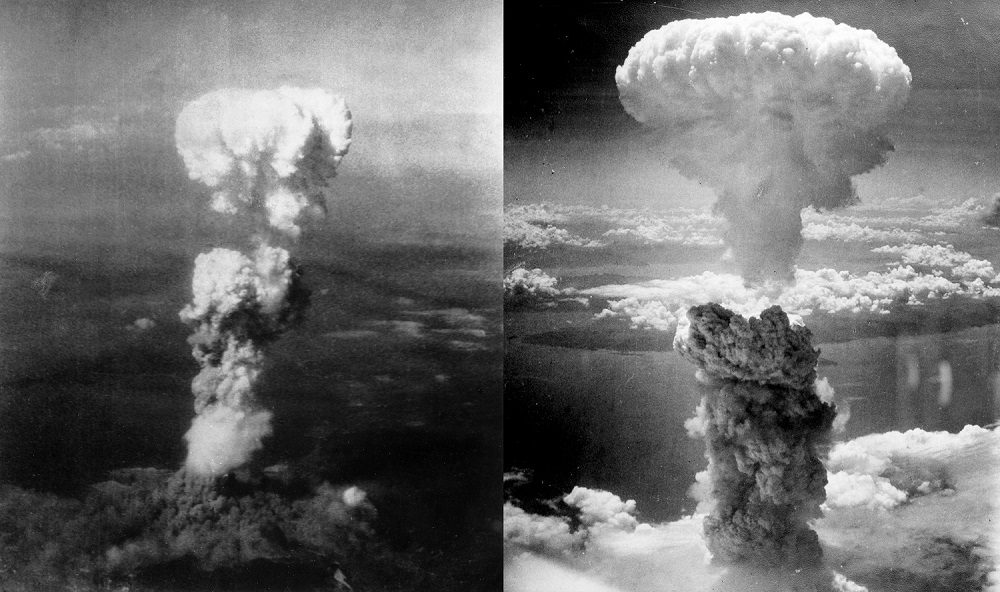
Various arguments were made after World War II that the atomic bombings of Hiroshima and Nagasaki had been unnecessary. Chief among them is that Japan had been on its last legs, on the verge of surrendering at any moment. Proponents claim that all the Allies had to do was to simply blockade Japan, and the Japanese government would have given in. In reality, there were good reasons for the US to not have waited for the blockade to force Japan’s surrender. However, there was another mistake – a simple translation error – that had it been detected might have prevented the atomic bombing of Japan.
The Widespread Suffering of Millions Each Day the War Continued

There is a key flaw with the argument that the Allies could have simply waited for the blockade to force Japan’s surrender. It rests on two false premises. First, that the war was confined solely to Japan and the Japanese home islands. Second that the Japanese were isolated unable to inflict harm outside Japan. Unfortunately, that was not the case. At war’s end Japan still controlled vast swathes in Asia and the Pacific. Hundreds of millions living in the Japanese Empire were forced to endure a brutal occupation.
Additionally, there were millions of Japanese soldiers, sailors, and airmen still fighting Allied forces in China, Burma, and in the Pacific. Regardless of whether or not the Japanese home islands were blockaded, the war still went on beyond Japan. Also, the Japanese held hundreds of thousands of Allied prisoners of war, and subjected them daily to barbaric treatment. In short, every day the war that the continued was another day in which millions of civilians suffered. It was also another day in which thousands of military personnel more were killed and injured on the front lines.
A Surrender Ultimatum

Given the extensive damage and suffering endured by millions each day that the war dragged, America and the Allies were understandably reluctant to simply wait for the blockade to forced Japan’s eventual surrender. In the meantime, Japanese officials had lost their grip on reality, and were training even children to fight Allied soldiers with sharpened sticks. The Allies deemed Japan a formidable foe who was causing serious harm every day. All available evidence indicated that it would continue to cause serious harm until stopped. So they dealt with Japan as a menace that needed putting down ASAP.
From that perspective, it made sense from the Allies’ perspective to do whatever needed doing to force Japan’s surrender. Doing whatever needed doing included the use of atomic weapons. However, despite all of that, the atomic bombing of Japan might have been averted, if not for a simple translation error. As such, it is a prime candidate for history’s worst and most momentous translation mistake. It took place against the backdrop of the Potsdam Conference in the summer of 1945, and the Potsdam Declaration issued at its conclusion, calling for Japan’s surrender.
History’s Worst Translation Error

The Proclamation Defining Terms for Japanese Surrender was issued by the Allies on July 26th, 1945. That was just ten days after the Manhattan Project bore fruit, and America had successfully tested history’s first atomic bomb. The United States, along with her allies, issued a blunt “or else” statement, calling for the surrender of all Japanese armed forces. It was an ultimatum, warning the Japanese that if they did not surrender – and surrender soon, at that – they would face “prompt and utter destruction”.
The Potsdam Declaration’s terms were hotly debated within the Japanese government. Subsequently, Prime Minister Kantaro Suzuki stated at a press conference that Japanese policy towards the Potsdam Declaration would be one of “mokusatsu”. Mokusatsu was a Japanese word which meant that Prime Minister Suzuki had received the message, and that he was giving it serious consideration. Unfortunately, Japanese is a subtle language, in which the same word could have various meanings. Another possible meaning for mokusatsu is to “contemptuously ignore”.

We now know that “contemptuously ignore” was not the meaning the Japanese prime minister had intended. However, that was the meaning that American translators gave President Harry Truman. International news agencies reported to the world that the Japanese government’s response to the Potsdam Declaration was to declare that it was “not worthy of comment”. Ten days later, a Boeing B-29 Super Fortress heavy bomber, the Enola Gay, took off from Tinian island in the Pacific. In its bomb bay was the most terrible weapon invented by mankind to date, which it unleashed on Hiroshima. A few days later, another B-29, Bockscar, dropped another atomic bomb on Nagasaki.

_________________
Some Sources & Further Reading
History Halls – The WWII Intelligence Screwup That Almost Placed New Zealand Under Martial Law
Hasegawa, Tsuyoshi – Racing the Enemy: Stalin, Truman, and the Surrender of Japan (2005)
National Security Agency – Mokusatsu: One Word, Two Lessons
Pangeanic – The Worst Translation Mistake in History

