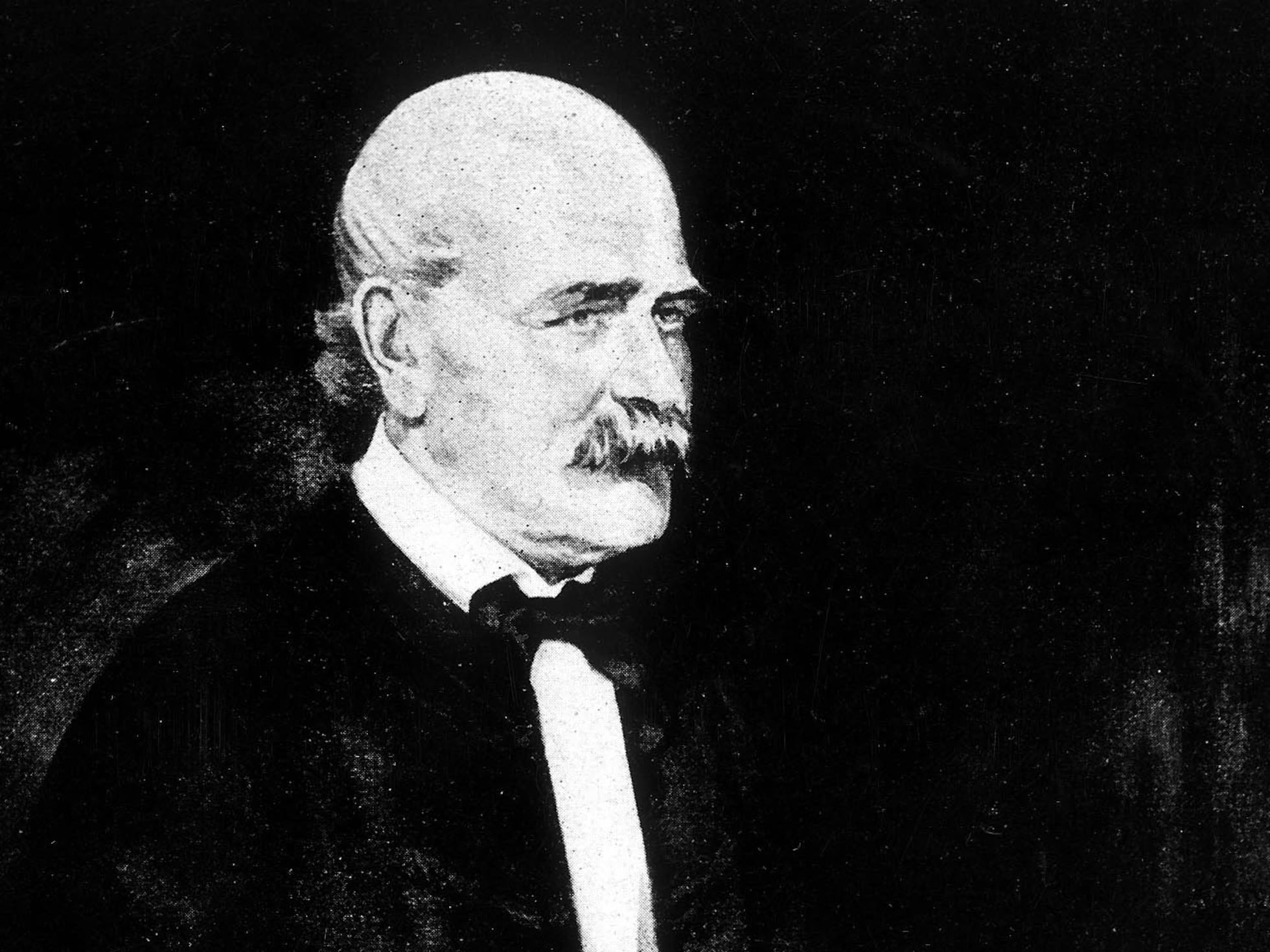
No good deed goes unpunished. Take Ignaz Semmelweis, the doctor who revolutionized healthcare when he announced that unhygienic practices in hospitals can make patients sick or even kill them. The medical profession of his day hated him, and committed him to a mental asylum where he was beaten to death. Below are some interesting facts about that unfortunate situation.
A Discovery That Revolutionized Medicine – Eventually

Historically, childbirth has been quite hazardous. As late as the mid-nineteenth century, many women who gave birth or had miscarriages in hospitals lost their lives to postpartum infection. Also known as puerperal or childbed fever, it targets the female reproductive organs with frequently fatal consequences: mortality rates were as high as 30%. That changed – although not as soon as it should have – when a Hungarian doctor named Ignaz Semmelweis (1818 – 1865) announced that he had discovered the cause.
Semmelweis had noticed that the mortality rate at Vienna General Hospital was three times higher in the maternity ward overseen by doctors than in that overseen by midwives. Fellow physicians at the hospital had routinely performed autopsies, then went straight to the maternity ward to deliver babies without washing their hands. By simply getting doctors to wash their hands, rates were drastically slashed from as high as 30% all the way down to 2%. Semmelweis thus pioneered modern antisepsis – the use of antimicrobial substances to reduce infections.
Semmelweis Ended up Hated by His Colleagues

Semmelweis’ discovery should have made him a hero, but it instead made him a pariah among fellow physicians. He was outright loathed by colleagues insulted by his implication that they were killing patients with their dirty hands. The result was an increasingly toxic workplace, and Semmelweis was fired. He eventually had a nervous breakdown in 1865, and his colleagues promptly committed him to a mental asylum. There, he was beaten by guards, and suffered a wound that turned gangrenous and killed him. Years after his death, Louis Pasteur’s germ theory confirmed that Semmelweis had been right all along.

_________________
Some Sources & Further Reading
NPR – The Doctor Who Championed Hand-Washing and Briefly Saved Lives
PBS – In 1850, Ignaz Semmelweis Saved Lives With Three Words: Wash Your Hands

