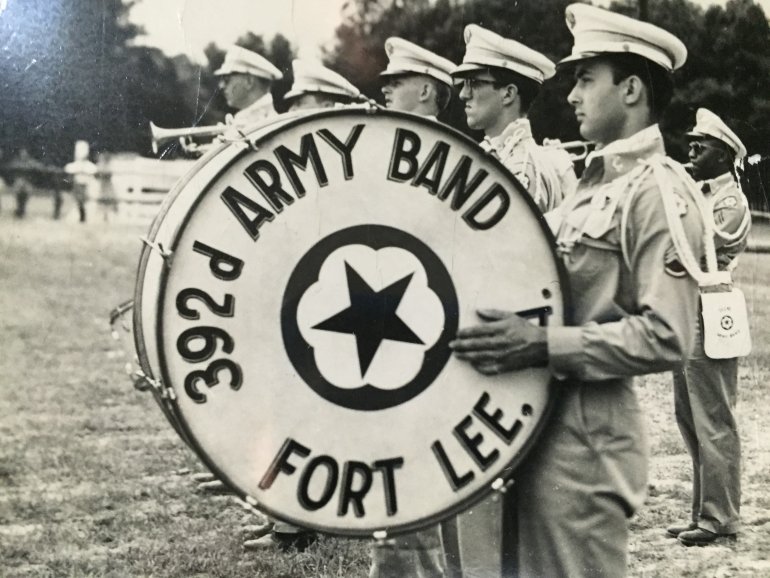
The mid-twentieth century was a particularly active time for the US military. In quick succession, it fought in World War II in the 1940s, the Korean War in the 1950s, and began its involvement in the Vietnam War in the 1960. Quite a few servicemen fought in all three conflicts, and once such, as seen below, was Ludwig Hoge. Below are some interesting facts about his service in three wars.
Surviving Three War Without a Scratch

Ludwig Hoge is one of the few people who was able to say that he was involved in front line combat in WWII, the Korean War, and Vietnam. He is a member of the even more exclusive fraternity of American soldiers who managed to survive their service in all three wars without even a scratch. As Hoge saw it, it was all thanks to prayer: “Pray every chance you could get. And by that, I think it saved my life. I really do”.
Hoge, of Bridgeport, Ohio, was born in 1926, and started his military career when he was drafted into the United States Army in WWII. Over the next twenty five years, he served as an infantryman, a ski trooper, a front line entertainer, a bandsman, and a supply sergeant. In his first conflict, WWII, Hoge fought his way across Europe with the 36th Infantry Division. He never forget the bullets that whizzed by his head, the explosions, and the shrapnel that screamed all around him.
Playing Before the World’s Toughest Music Critics?

Hoge lost many friends in the Second World War, but he survived it without a scratch, and earned a Bronze Star along the way. In the country’s next conflict, the Korean War, Hoge served as a percussionist in the 45th Infantry Division’s band. In 1953, he and his band mates entertained American troops on Korea’s front lines, within hearing distance of the enemy. For the most part, the Chinese tolerated, and perhaps even enjoyed, Hoge’s music. However, the Reds were tough critics, and did not hesitate to make their disapproval known, in no uncertain terms. He recalled that: “As soon as you started playing music they did not like to hear, they started sending [artillery] rounds in”.
After the Korean War, Hoge spent fifteen years in service far from danger, until another war in saw him sent to Southeast Asia. “I said to myself, oh mannn”, he recalled decades later. In 1968, Hoge, who by then felt he was getting a bit long in the tooth, served in the 11th Armored Cavalry Regiment in Vietnam. It was rear echelon service in charge of a service club band, but he still came under fire many a time. In a 2016 TV interview, Hoge was amazed at his good fortune, and grateful: “I walked away from all three [wars]. I don’t know how many people can say they did”. Ludwig Hoge passed away in 2020.

________________

