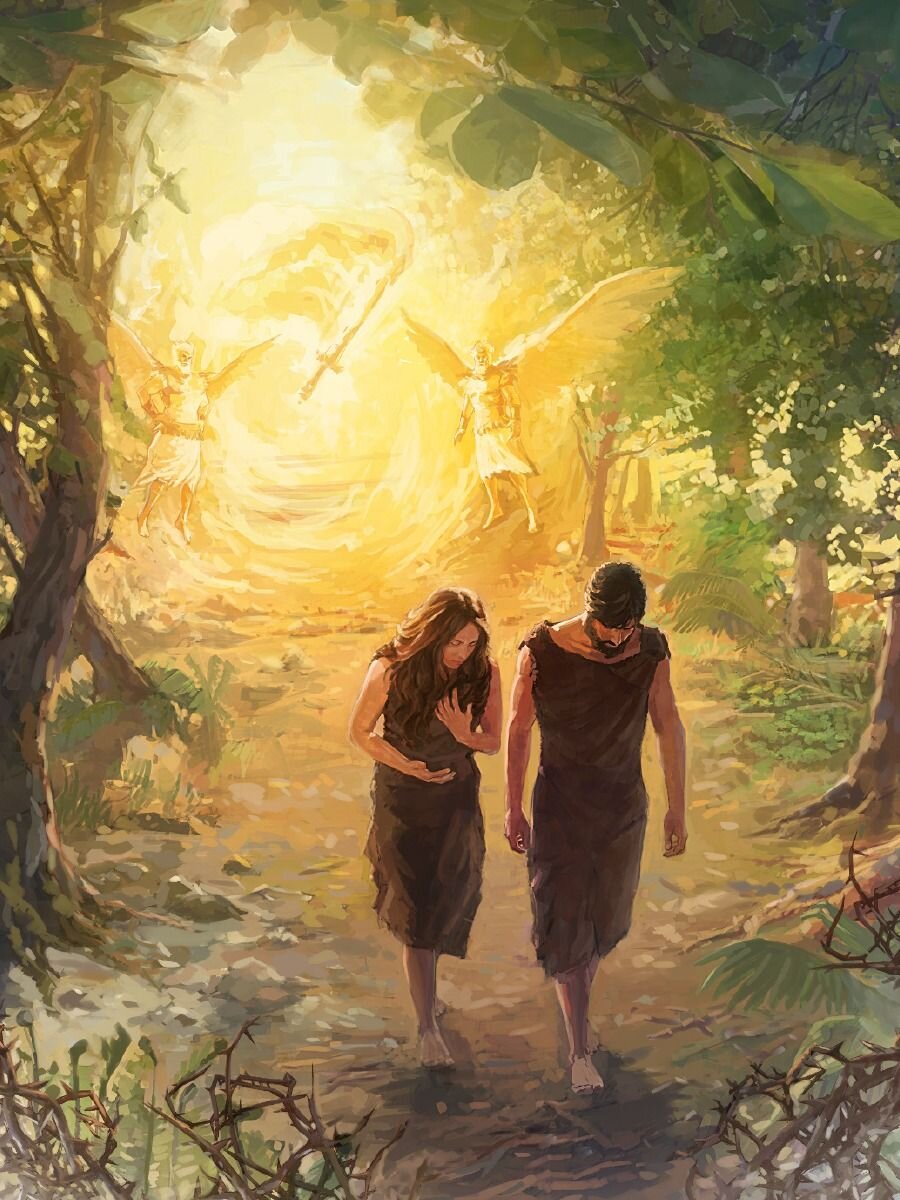
Much of the Bible is more than religious text: it also serves as a historic document. Not so much about the accuracy of what it describes, but about the beliefs and mindset of the ancient Israelites who composed and wrote down its stories, and adopted them as life guidelines. Some of the book’s most captivating stories are about Yahweh’s punishments of those who displeased Him. Of those, the mother and father of all punishments is that of the mother and father of humankind.
The Biblical Narrative of the Garden of Eden

The mother and father of all biblical divine punishments is that of the couple described in the Old Testament as humankind’s father and mother: Adam and Eve. Their punishment, recounted in Genesis, chapter3, is one of the Bible’s foundational stories. To the ancient Israelites, it explained human sin, suffering, and death. As recounted in the Bible, Adam and Eve were the first humans created by God. He placed them in the Garden of Eden, a paradise where they lived in harmony with the Lord, nature, and each other.
Adam and Eve were allowed to eat from any tree, except the Tree of the Knowledge of Good and Evil. God warned them that to eat from that tree means death. However, Satan appeared as a serpent to Eve, and tempted her to eat the fruit, telling her that it would not lead to death. Instead, it would make her like God, aware of good and evil. Eve ate the forbidden fruit, and then convinced Adam to partake as well. As seen below, the couples’ eyes were immediately opened – and humanity’s troubles immediately began.
The Fall of Man Narrative’s Significance to the Ancient Israelites

The Book of Genesis recounts that as soon as they ate the forbidden fruit, Adam and Eve realized they were naked. Ashamed, they covered themselves and hid from God. When He confronted them, Adam blamed Eve, and Eve blamed the serpent. So God punished all three. The serpent was cursed to crawl on its belly and be in constant conflict with humanity – a metaphor for the ceaseless struggle of good against evil. Eve was cursed to suffer intense pain in childbirth and desire her husband, who would rule over her – the theological origin of the relational imbalance between the sexes. As to Adam, he was told that the ground would be cursed because of him. The gravy train and easy life were over.
From then on, Adam would have to work hard for his food, and deal with life’s disappointments until he returned to dust – signifying death and human mortality. God banished Adam and Eve from the Garden of Eden. To ensure they could no longer live forever, He also denied them access to the Tree of Life, and assigned cherubim with a flaming sword to guard it. The biblical narrative of the punishment of Adam and Eve is known as the Fall of Man. To the ancient Israelites, it marked the start of sin and suffering. However, the narrative also sets the stage for themes of redemption that appear throughout the Bible, as God’s often harsh judgments are often balanced by the promise of future restoration.

_________________
Sources and Further Reading
Encyclopedia Britannica – Adam and Eve
History Halls – Did a Real Life Natural Disaster Inspire the Biblical Sodom and Gomorrah Account?
Washington Post, November 6th, 2017 – It’s Time to Rethink How You read the Story of Adam and Eve

