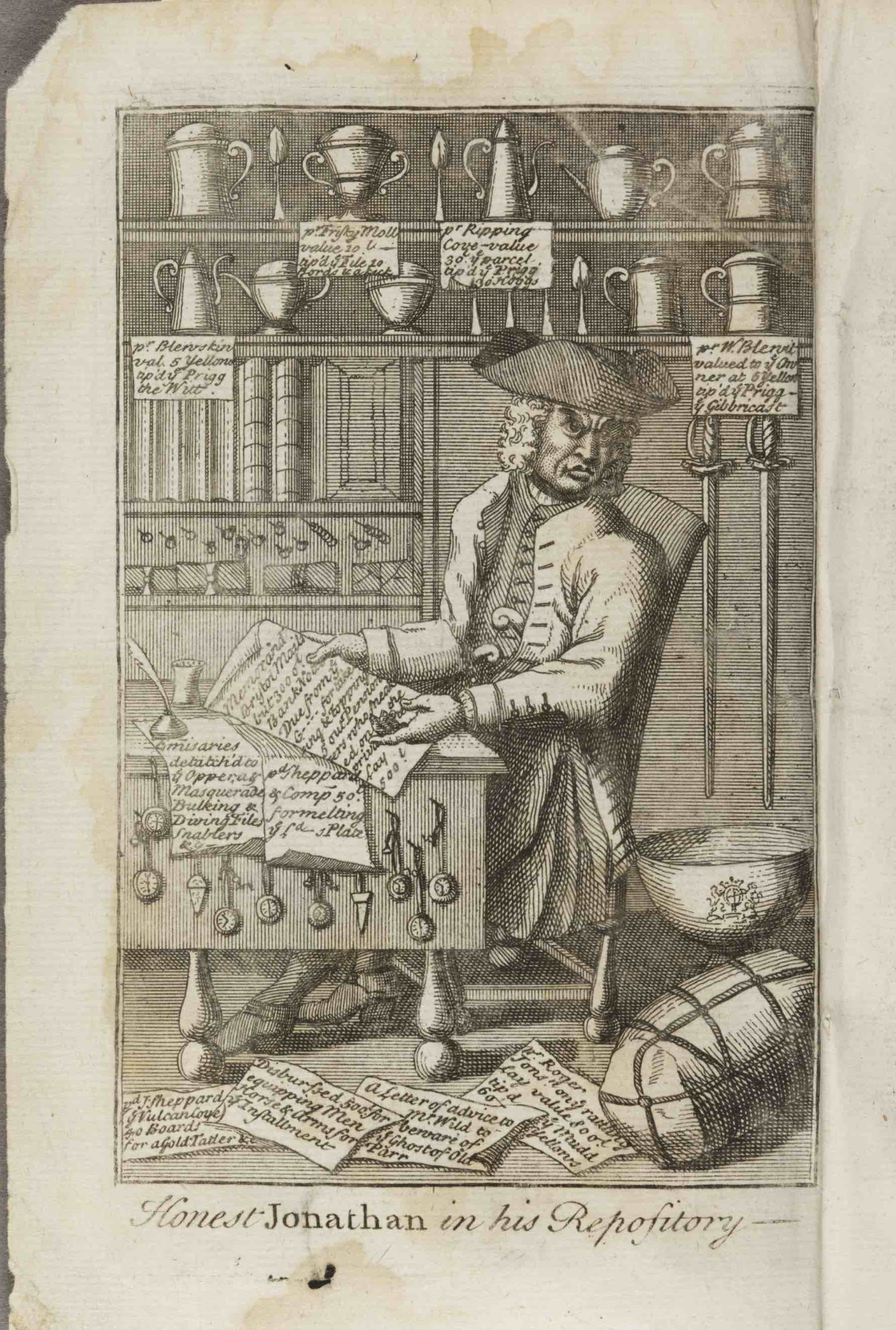
English criminal kingpin Jonathan Wild (1682 – 1725) reigned over an underground realm of thieves and highwaymen. He ran a far flung extortion racket, and was Britain’s biggest fence for stolen goods. After he declared that he had reformed his ways and gone straight, the authorities turned to Wild to help bring rampant crime under control. They figured that it literally took a thief to catch another thief, so they hired Wild and set him loose on criminals who had seemingly run amok and terrorized London. As seen below, the authorities were a bit naïve.
A Criminal Kingpin

Jonathan Wild was born in the English countryside, where he got married in his teens. In his early twenties, he abandoned his wife and headed to London to seek his fortune. Things did not start well, and he ended up a debtor’s prison. It was there that he made contacts with the criminal world, which he soon joined and throve in. He excelled at organization, and before long, Wild was directing swarms of thieves and sundry thugs, and fencing the proceeds of their crimes. When word went out that Wild had abandoned crime and reformed, London’s authorities turned to him to help ferret out other criminals.
Granted the designation “Thief-Taker General”, Wild took to his new job and title with a passion. He organized highly effective teams of thief catchers who swiftly began to wreak havoc upon criminals and the criminal underworld. There was a catch, however. Wild only targeted criminals who competed against him. He exploited the English authorities’ faith in him to transform him into the greatest criminal kingpin England has ever seen. Even as he was praised for his effectiveness as a crime fighter, Wild oversaw an extensive underground criminal empire that spanned the realm.
The Thief-Taker General

Jonathan Wild went after the criminal underworld with great zeal. He broke up gangs, and sent criminals to the gallows by the dozen. During his career as a thief-taker, more than 120 people were hanged based on information and testimonies that Wild furnished the authorities. He also set up a side business as a private detective to recover stolen goods for a fee. What Wild’s clients did not know was that it was his thieves who had stolen their goods in the first place.
“Recovery” simply came down to Wild sifting through his warehouses of stolen property. The Thief-Taker General had not reformed, but had simply hoodwinked everybody. Wild became an even bigger crime lord, and delivered his rivals to the authorities simply as a means to get rid of the competition. The term “double cross” owes its origins to Wilde. He had a ledger in which the names of partners who ran afoul of him, and whom he was setting up for delivery to the authorities and the gallows, were marked with two crosses, or Xs.
Wild was finally brought down when a criminal double crossed by Wilde turned around and accused the Thief-Taker General of fencing stolen goods. An investigation confirmed the allegation, and Wild was arrested. Many of his underlings then turned crown evidence and testified against him. It was finally revealed to all that England’s greatest crime fighter had also been its greatest criminal. Wild was tried, convicted, and hanged at Tyburn, where he had sent so many others to their death.

_________________
Some Sources & Further Reading
Encyclopedia Britannica – Jonathan Wild, English Criminal
History Halls – Wild West Outlaw Black Bart, ‘The Gentleman Bandit’
Howson, Gerlad – Thief-Taker General: The Rise and Fall of Jonathan Wild (1970)

