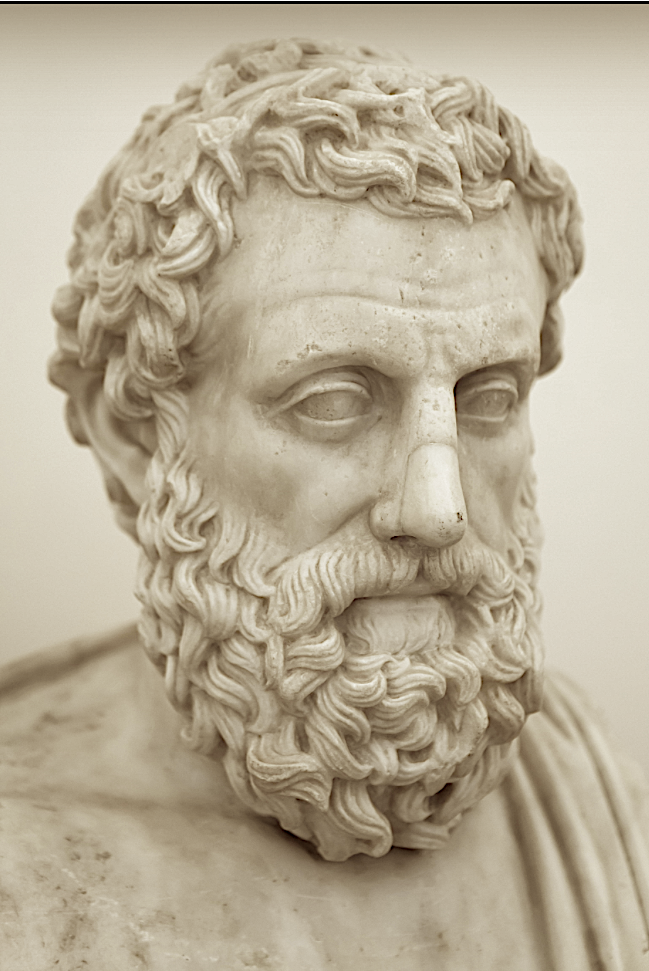
Ancient Athenian dramatist Aeschylus (525 – 455 BC), a pioneer of serious drama, is often referred to as “The Father of Tragedy”. Ancient Greece’s greatest playwright, he penned more than ninety plays. Half of them won prestigious prizes at Athens’ great drama festivals. Below are some interesting facts about that ancient giant of drama.
Aeschylus Was the Most Influential Pioneer in the History of Acting

Tradition has it that Aeschylus used to work in a vineyard. Then, he was visited in his sleep by the god Dionysius, who ordered him to write tragedies instead. Greek tragedy was typically performed at religious festivals, such as the Athenian Dionysia, during which three playwrights competed for a prize with three tragedies and a comedy each. Acting as we understand the term today, and thus theater, movies, and our favorite television series, can all be traced back to Aeschylus’ innovations.
Before Aeschylus came along, theater had consisted of a narrator telling a story. That was broken at intervals with a chorus singing and dancing. Aeschylus was the first to produce plays in which the story was conveyed by actors who performed roles and exchanged dialogue. Aeschylus was also the first to introduce striking imagery and extravagant costumes to the stage. He was the first to use a wheeled platform to change stage scenery. He also employed a crane to lift actors for use in scenes that entailed flight or descent from the heavens.
Thousands of Years Later, Aeschylus’ Plays are Still Performed All Over the World

The main themes of Aeschylus’ plays were conflicts between men and the gods, between the individual and the state, and the inevitability of divine retribution for misdeeds. Since playwrights submitted three tragedies when competing at the drama festivals, Aeschylus took to linking his three plays into a trilogy, which followed a family over several generations. For example, the Oresteia, which dealt with Agamemnon and his descendants in the aftermath of the Trojan War. The turbulence of Aeschylus’ own era, particularly the Persian Wars, strongly influenced his works.
Aeschylus fought in the Battle of Marathon, an Athenian victory in 490 BC that repelled a Persian invasion, and in which his brother was killed. He also fought at the battles of Artemisium and Salamis. Those experiences are reflected in the earliest of his surviving plays, The Persians. For all his literary accomplishments, Aeschylus’ self-penned epitaph said nothing of his success as a playwright. It simply stated what he was proudest of in his life and what he wanted to be remembered for was that he had fought at Marathon. Aeschylus’ surviving plays are still performed in theaters all around the world.

_________________
Some Sources & Further Reading
Freeman, Charles – The Greek Achievement: The Foundation of the Western World (1999)
History Halls – The Men Who Made Ancient Greece: Solon, the Lawgiver
Rosenmeyer, Thomas G. – The Art of Aeschylus (1982)

