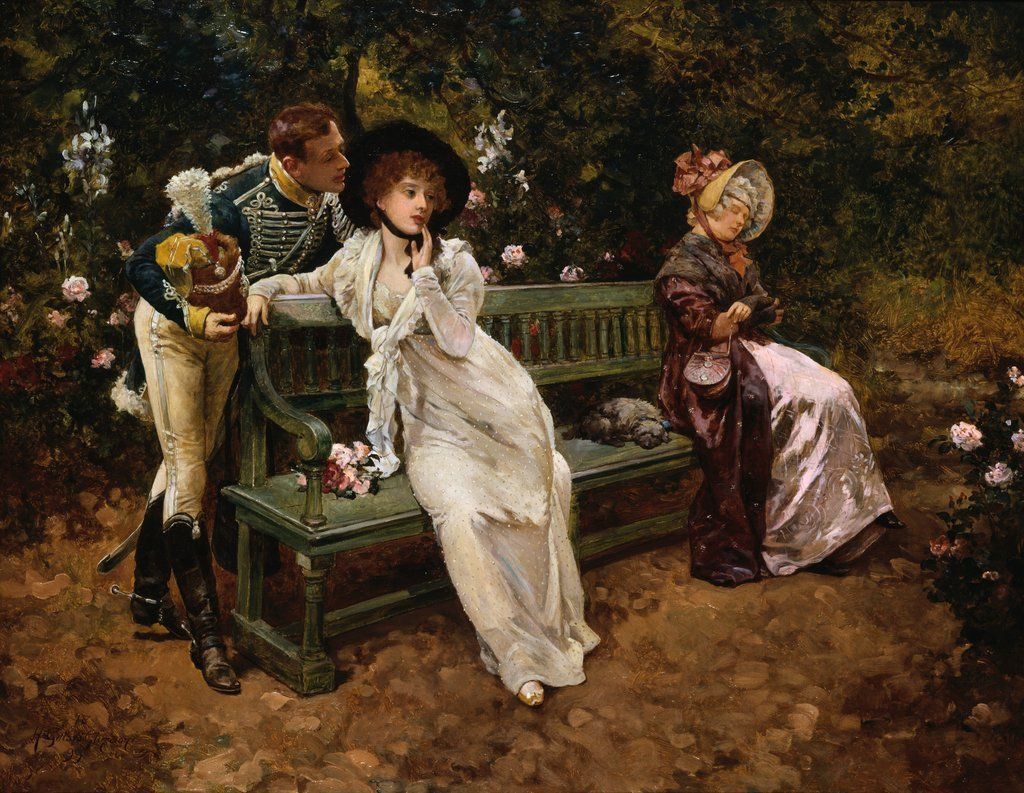
The Victorian era is commonly seen as full of stifling social mores and prudishness taken to extremes. Compared to what had gone on before and what came after, it actually was an uptight period. At least for young people of the middle and upper classes. Victorian fixation on propriety was not exactly conducive to the flowering of romance. So, as seen below, Victorian youths turned to escort cards – which did not mean then what they would now.
Victorian Escort Cards Did Not Mean What they Would Today

Courtship rituals in the Victorian Age did not lend themselves to spontaneity. Especially not with ever present and often dour chaperons who watched over the young ladies in their charges like hawks, and cast a baleful eye upon all young men in the vicinity. With such social dragons guarding the maidens fair, it could be pretty daunting for an aspiring beau to even approach the object of his desire, let alone try to romance and sweep her off her feet.
One way to was to discretely slip a young woman an “escort card” when her chaperone’s attention was elsewhere. Victorian escort cards were not business cards with the contact information of those who offered intimate favors for money. Instead, they were printed cards that allowed nineteenth century single men to cheekily get around the era’s rigid rules of social interaction between the sexes, and ask a woman if they could, literally, escort her home.
Some Victorian Men Spammed Escort Cards

The Victorian era’s escort cards were basically the Tinder or Match dot Com of the day in ink and paper. Many posed variations of the question: “May I see you home”. Some put that in abbreviated slang along the lines of “May I.C.U Home”. Others went for cute rhymes like “If You Have No Objection, I Will Be Your Protection”. Others simply got down to the point: “Not Married And Out For a Good Time”.
Victorian social mores frowned upon men simply approaching women with whom they were unacquainted to chat them up. To bypass such strictures, a man would surreptitiously slip her an escort card. If her interest was piqued enough to want to read it, she might hide it inside her glove or fan. Escort cards cost about a penny each, so quite a few young Victorian men cast them about broadly – basically spamming them to all potential matches within reach.
Victorian Secret Romance Codes

Victorian cards might have cost just a penny each, but a penny in the nineteenth century was significantly more valuable than a penny in the 2020s. So some young men – especially those who cast their net as wide as possible – went for the Victorian version of romance recycling. If the object if their affection was not interested, some cards asked that they be returned. If she was interested enough to explore the possibility of taking it further to see how it goes, Victorians developed a romance code between the sexes, to surreptitiously communicate without alerting a young woman’s chaperone.
For example, different winks, based on their number, which eye was used, and the kind of eye motion, could mean different things, from compliments, to warnings, to declarations of love or declamations of hatred. It all seems pretty tame by modern standards, but at the time, Victorian parents were greatly alarmed about such secret communications. They feared, often rightly, that the wrong kind of man with the wrong kind of intentions could lead an innocent young woman astray.

________________
Some Sources & Further Reading
National Geographic – Saucy ‘Escort Cards’ Were a Way to Flirt in the Victorian Era
National Public Radio – When Flirtation Cards Were All the Rage

