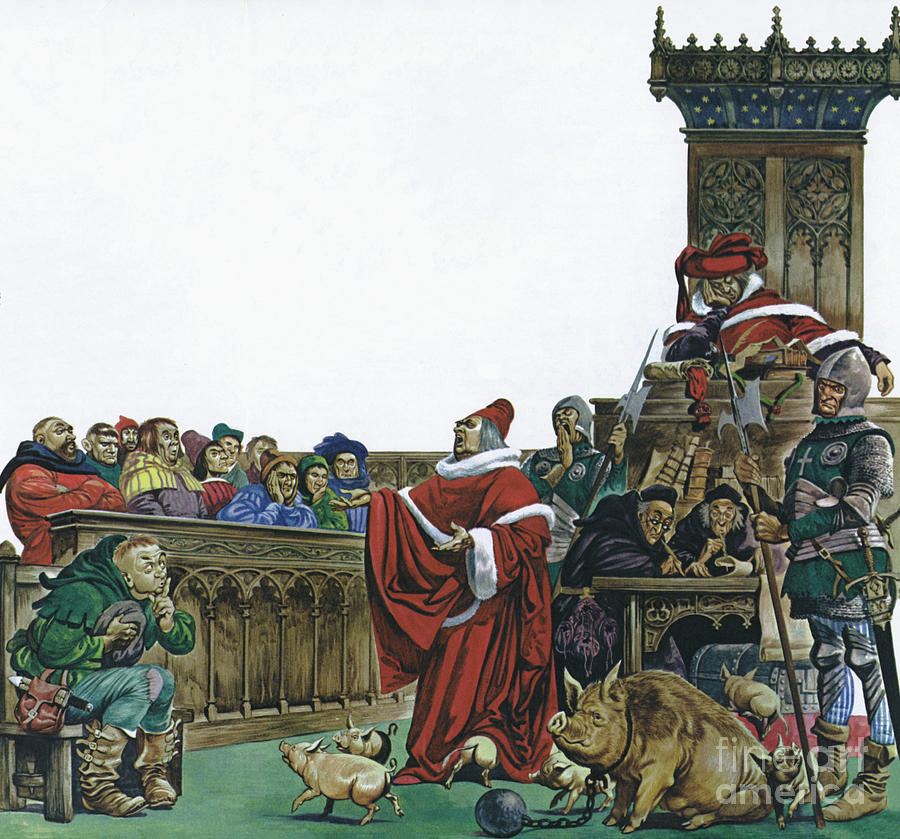
In Middle Ages Europe, non-human animals that acted badly were liable to be tried in both secular and ecclesiastical courts. Records exist of such legal proceedings that took place from the thirteenth to eighteenth centuries. Most surviving animal trial records are from France. However, records also exist of such cases being tried in Germany, the Netherlands, Switzerland, and some Slavonic countries. Below are some interesting facts about medieval animal trial.
The Criminal Trial of a Sow and Piglets Charged With Murder

Animals that acted up in Middle Ages Europe could be charged with a crime and tried in court. In 1457, a sow with her six piglets in tow attacked and killed a five-year-old child in Savigny, France. Today, the pig’s owner might be criminally charged for negligence. Europeans in the Middle Ages thought differently about law and justice. Savigny’s authorities charged the porcine with murder, and charged her piglets as accomplices.
The accused were defended by a court-appointed attorney, and after testimony was heard, a judge found the sow guilty. He sentenced the condemned pig to be hanged to death by her hind legs, in accordance with local custom. If it was any relief to the sow, her execution was not as painful as that of another pig convicted of homicide in Falaise, Normandy, in 1386. In that case, the porcine not only sentenced to hang, but to also be maimed in the head and forelegs before the hanging.
Medieval Europeans Took Animal Trials Seriously

If Savigny’s condemned sow had any motherly concern for her offspring, she might also been relieved to know that her piglets were not destined to share their mother’s fate. Although they had been found covered in blood, the participation of the little pigs in the murder was not proven, so they were acquitted. It might seem ridiculous to us today to criminally try an animal, because we know that animals lack the moral agency necessary for criminal culpability. However, Europeans in the Middle Ages thought differently.
The proceedings were taken quite seriously by all involved: the judges, lawyers, bailiffs, and hangmen in case the defendant animal was found guilty. Savigny’s homicidal sow was held in prison as she awaited trial, and the jailer charged the same daily rate for the pig’s board as he did for human prisoners. The court even hired a professional hangman to carry out the sentence, and he charged the same fees as those charged for the execution of a human.

_________________
Some Sources & Further Reading
History Halls – Charles the Mad: The King Who Thought He Was Made of Glass
JSTOR Daily, September 13th, 2017 – When Societies Put Animals on Trial

