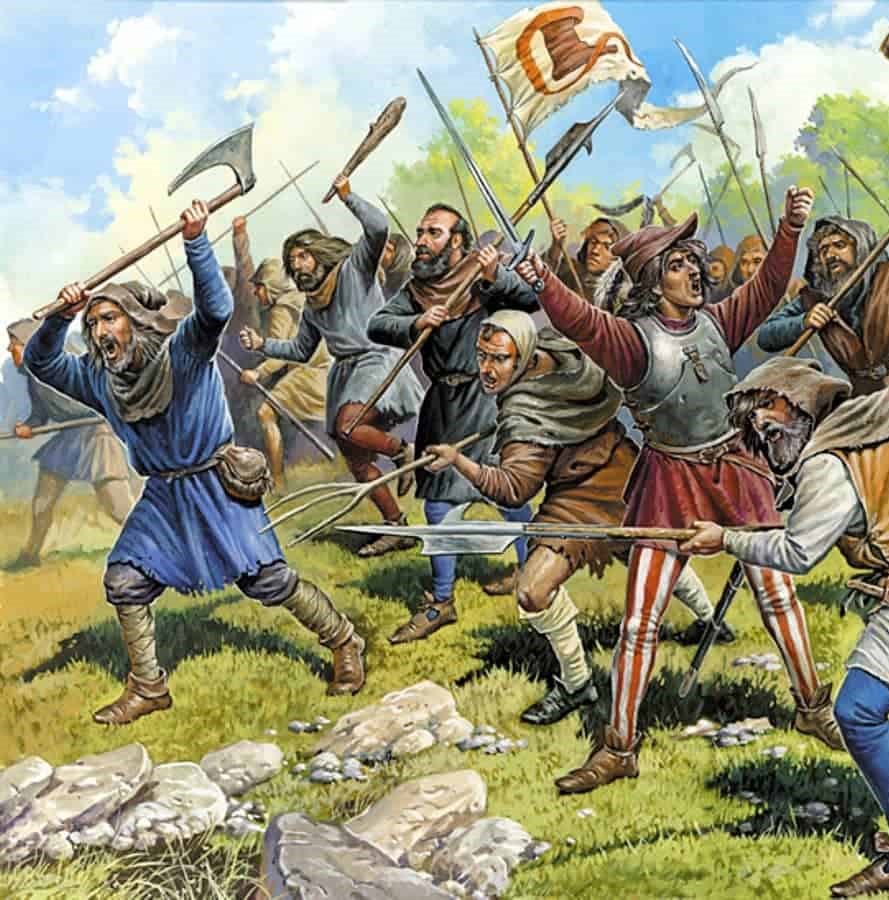
In the twenty first century, most people grew up and live in societies in which concepts such as egalitarianism and equal treatment before the law are established tenets of governance and social organization. Even in countries where such concepts are not actually practiced, they are at least widely preached, and they remain a hoped for ideal and aspiration. However, as seen below, that was not the case throughout most of history.
The Shift to Settled Communities and the Rise of Social Stratification

Our species evolved as hunter gatherers. For untold millennia, humans and hominid predecessors lived in small bands that roamed the land in search of sustenance, be it animal or plant. In such small groups, there was little room for social stratification, and things were pretty egalitarian. Then came the Agricultural Revolution. Once our distant ancestors shifted from a hunter gatherer lifestyle to that of settled agriculturists, the majority of mankind ended up living in highly stratified societies with stark class divides.
In such societies, a relatively small elite of aristocrats emerged. They managed to literally lord it over a mass of oppressed, exploited, and often cowed commoners. The majority of said commoners were peasants. They were often tied to the land, and had to toil in conditions of outright, or de facto, peonage and serfdom for the betterment of their social betters. Those betters seldom bothered to conceal their contempt for the peasants. Indeed the very name of their occupation was often used as a pejorative.
When Downtrodden Peasants Reached the End of Their Tether

Religion’ promise of a better life in a world to come helped peasants accept their lot in this world. If that failed, the nobility could turn to its monopoly of government and organized and disciplined military force. That often sufficed to intimidate the peasants and keep them in line. However, sometimes the conditions got too bad, and the oppression and injustice grew too unbearable. That was when the peasants snapped and fought back. Despite the poor odds of success and the high risk of massive and vicious retaliation at the end of the road, peasants who reached the end of their tether took to arms and rose up in revolt.
Throughout history, most such uprisings ended in failure and widespread massacre. The forces of the landlords and aristocracy won most of the time – the peasants almost always lacked the resources, training, and organizational capabilities of professional armies. When they beat down the rebellion, they routinely exacted bloody vengeance on the despised peasants who had dared to challenge the natural order. Nonetheless, such rebellions continued to erupt whenever the agrarian class could take it no more. History Hall will cover a broad sample of such uprisings – be sure to check our Rebels page for new peasant uprising articles that will be posted with regular frequency.

_________________
Some Sources & Further Reading
International Social Science Journal, XXI, 2 (1969) – On Peasant Rebellion

