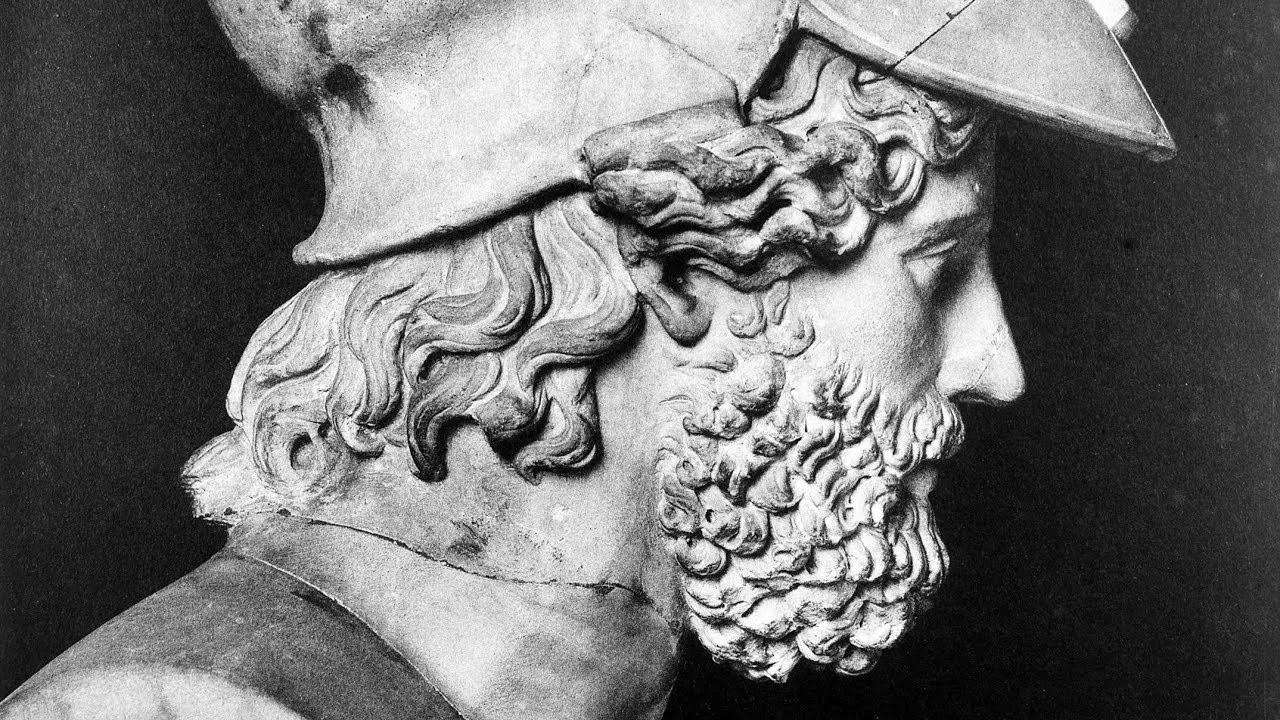
Miltiades (550 – 489 BC) was an Athenian general best known for his victory over the Persians at the Battle of Marathon in 490 BC. His success saved Athens, but as seen below, it was not enough to save him from Athenian ingratitude.
From a Persian Vassal to Champion of Greek Freedom from Persian Rule

The victor of Marathon was born into a wealthy Athenian aristocratic family, which owned a private kingdom in the Chersonese (today’s Gallipoli Peninsula) that Miltiades inherited in 516 BC. In 513 BC, King Darius I of Persia, also known as Darius the Great, invaded the Chersonese. Resistance would have been futile, so Miltiades surrendered, accepted the role of vassal, and accompanied Darius on a campaign against the Scythians.
When the Ionian Greeks of Asia Minor revolted against Persian rule in 499 BC, Miltiades, as a Persian vassal, marched against the rebels, but secretly supported their cause and helped funnel them aid from Athens. Athens even sent an expeditionary force which joined the rebels in marching to the Persian governor’s seat in Sardis, and put it to the torch.

When the Persians crushed the revolt in 495 BC, they learned of Miltiades’ betrayal. His treachery unmasked, he was forced to flee to Athens, where he was elected one of its ten generals. The Persians determined to punish Athens for aiding the Ionians, and sent a seaborne punitive expedition which landed on the plain of Marathon north of Athens, in 490 BC. The Athenians marched out with a force of about 10,000 hoplites – armored heavy infantry – with no cavalry or archers, to confront a Persian force of at least 25,000 infantry, plus thousands of archers and 1000 cavalry.
A Great Victory

The Athenians, who had ten generals and a rotating command system by which each general held command for a day, wavered. For over a week, they simply watched the Persians from heights overlooking Marathon. Finally, it was Miltiades’ turn to take overall command, and he convinced a closely divided war council to give battle. Descending from the heights, Miltiades assembled the army with reinforced flanks and a weakened center, and advanced.
Once they got within Persian archery range, Miltiades ordered his men to charge at a full run, in order to spend the least amount of time under a rain of arrows. They rapidly closed the distance, and smashed into the more lightly armed Persians. The Athenians’ reinforced flanks pushed back their opposition, then wheeled inwards to attack the Persian center, which panicked, broke, and fled in a rout to the safety of their beached ships.
Athenian Ingratitude

The Battle of Marathon was a stunning and lopsided victory. The Athenians and their allies lost about 200 dead, while Persian dead numbered about 6400. Miltiades returned to Athens in glory, but the glory was not destined to last. The following year, he led a strong expedition against some Greek islands that had supported the Persians. Unfortunately, he bungled it badly, and suffered a severe leg wound in the process.
When Miltiades returned to Athens, his defeat seemed so absurd to his fellow citizens that only deliberate treachery could explain it. Put on trial for treason, he was convicted and sentenced to death. However, the sentence was eventually reduced to a heavy fine. He was sent to prison, where he died soon thereafter when his leg wound became infected.

_________________
Sources and Further Reading
Gonick, Larry – The Cartoon History of the Universe I (1990)
Herodotus – The Histories, VI & VIII
History Halls – The Men Who Made Ancient Athens: Solon
World History Encyclopedia – Miltiades

